

Text messaging has become one of the most effective ways for businesses to reach customers but it’s also one of the most heavily regulated.
From new 10DLC registration requirements to strict opt-in and privacy rules, staying compliant isn’t optional anymore it’s essential for your brand’s reputation and security.
This Ultimate Guide to SMS Compliance 2025 breaks down everything businesses need to know and shows how Textology helps you stay safe, legal, and trusted while messaging at scale.
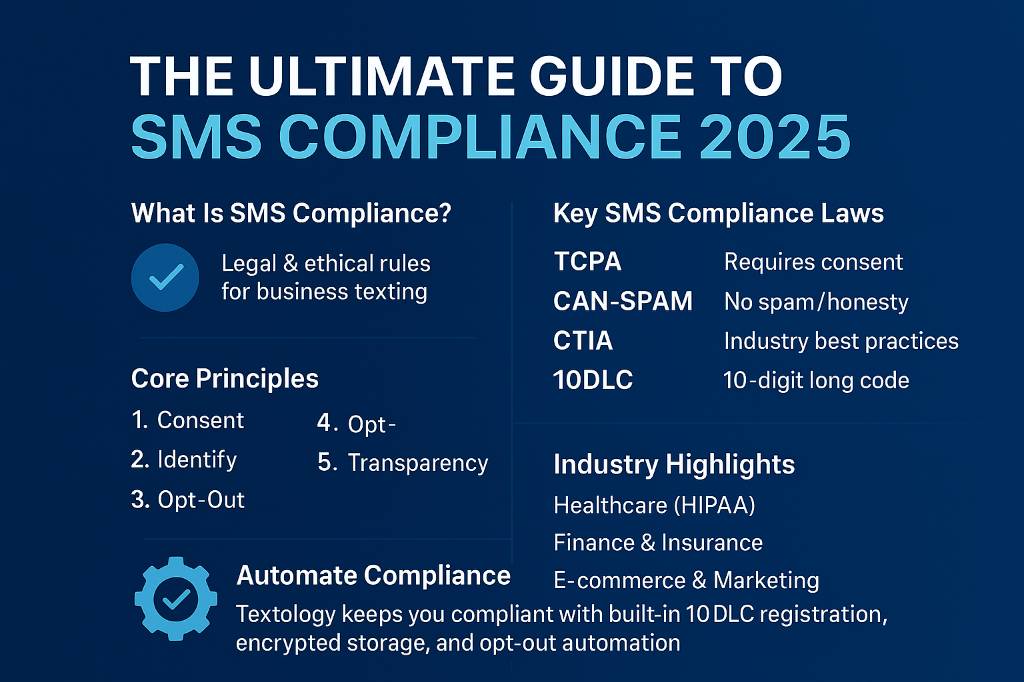
1. What Is SMS Compliance and Why It Matters
SMS compliance refers to the legal and ethical rules governing how businesses communicate via text messages.
These regulations are designed to:
- Prevent spam and fraudulent texts
- Protect consumer privacy
- Ensure clear consent and easy opt-outs
Non-compliance can lead to heavy fines, blocked campaigns, or even carrier bans making compliance a must for every responsible business.
2. The Key SMS Compliance Laws for 2025
Here are the main frameworks shaping SMS compliance in 2025:
-
TCPA (Telephone Consumer Protection Act): Requires explicit consent before sending marketing texts. CAN-SPAM Act: Prohibits misleading messages and mandates easy opt-outs.
-
CTIA Guidelines: Sets industry best practices around content, frequency, and transparency.
-
10DLC Registration: A newer requirement from carriers ensuring your business number is verified and traceable for higher deliverability and trust.
-
HIPAA (for Healthcare): Requires secure transmission and storage of patient data in healthcare-related messages.
Textology’s secure platform fully aligns with these frameworks ensuring your messages reach customers safely and legally.
3. Core Principles of SMS Compliance
Whether you’re sending reminders, promotions, or follow-ups, these principles apply to every message:
a. Consent is Non-Negotiable
Customers must opt-in before you message them. Use clear signup forms, checkboxes, or keyword confirmations like “Text YES to subscribe.”
b. Identify Yourself
Every message should include your business name so recipients know who’s contacting them.
c. Provide an Easy Opt-Out
Always include simple unsubscribe options e.g., “Reply STOP to opt out.”
d. Store Data Securely
Your contact lists, consent logs, and message history should be encrypted and stored safely.
e. Stay Transparent
Don’t hide fees, conditions, or message frequency. Transparency builds both compliance and customer trust.
4. How to Register for 10DLC in 2025
10DLC (10-digit long code) registration is now required for most business texting. It helps carriers verify your identity and improves deliverability by reducing spam filtering.
To register, you’ll need to provide:
- Your legal business name
- Tax ID or EIN
- Campaign use case (e.g., marketing, notifications, reminders)
Without 10DLC registration, your messages could be blocked or throttled.
Textology handles 10DLC registration for you automatically built into every business account.
5. Industry-Specific Compliance Highlights
Different industries have additional compliance needs:
Healthcare (HIPAA)
Messages must be encrypted and avoid exposing personal health data. → Textology’s HIPAA-compliant system ensures PHI protection.
Finance & Insurance
Requires secure data handling and audit trails. → Textology stores message records in encrypted archives for easy reporting.
E-commerce & Marketing
Must clearly differentiate between promotional and transactional texts. → Textology automates consent tagging to separate marketing vs service messages.
6. Automating Compliance with Textology
Manual compliance management is time-consuming but with Textology, it’s built in from day one.
Here’s how:
- Automatic 10DLC Registration: Verified business texting with carrier approval.
- Encrypted Message Storage: Protects sensitive information end-to-end.
- Opt-Out Automation: Instantly removes unsubscribed users from future campaigns.
- Consent Tracking: Keeps records of every opt-in for audits.
- HIPAA-Level Security: Ideal for healthcare, insurance, and legal sectors.
“Textology keeps you compliant with built-in 10DLC registration, encrypted storage, and opt-out automation.”
7. Common SMS Compliance Mistakes to Avoid
- Sending texts without prior consent
- Forgetting to identify your business name
- Ignoring opt-out requests
- Using unregistered numbers
- Storing contact data in unsecured spreadsheets
Each mistake can cost thousands in fines but all of them are preventable with automation.
Final Thoughts
In 2025, SMS compliance isn’t a burden it’s a brand advantage. Businesses that respect privacy and transparency earn stronger customer trust and higher engagement.
If you want to communicate confidently without worrying about complex legal frameworks Start your Textology free trial today and let our system handle compliance for you.